Daisies White
voice and accordion
Daisies White begins with an Appalachian folk tune I have carried for a long time. I first sang it in a women's trio that sang music from all over the world, and it has stayed close to my heart ever since: the song I sing to comfort myself in different cities, with different musicians.
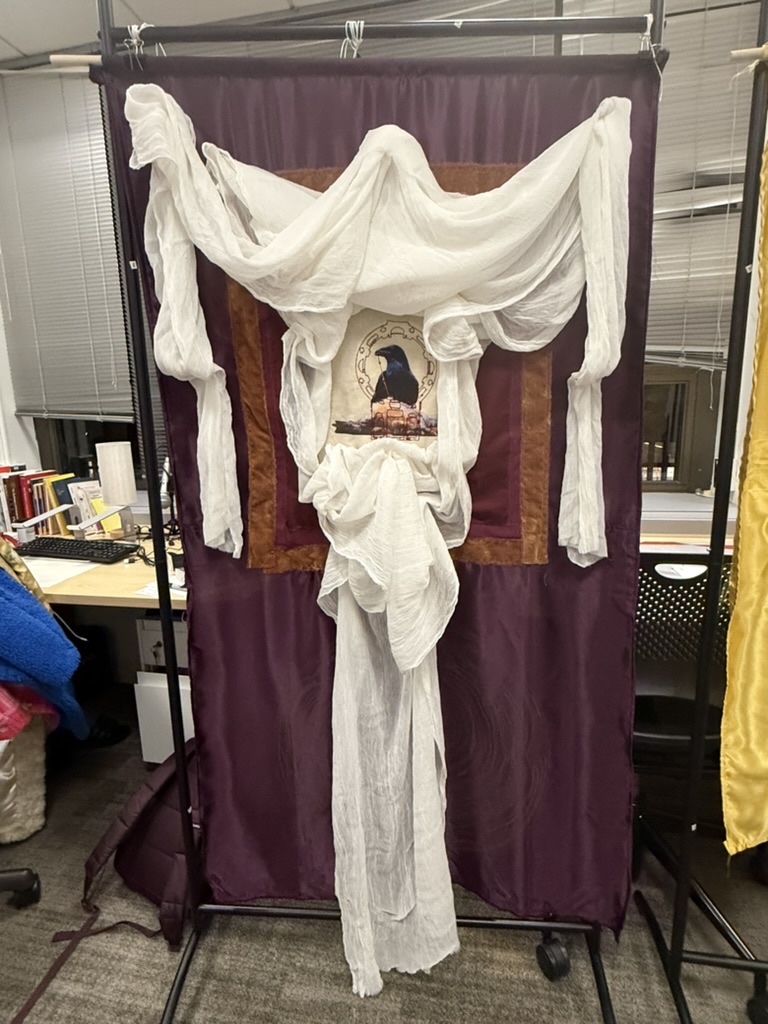
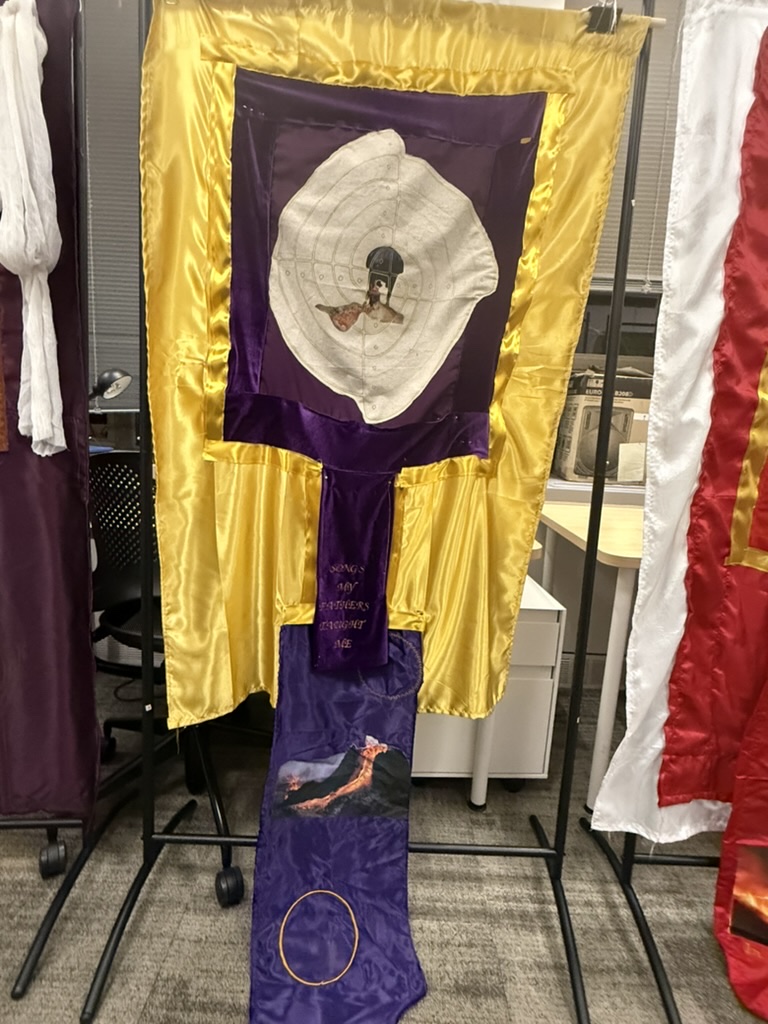
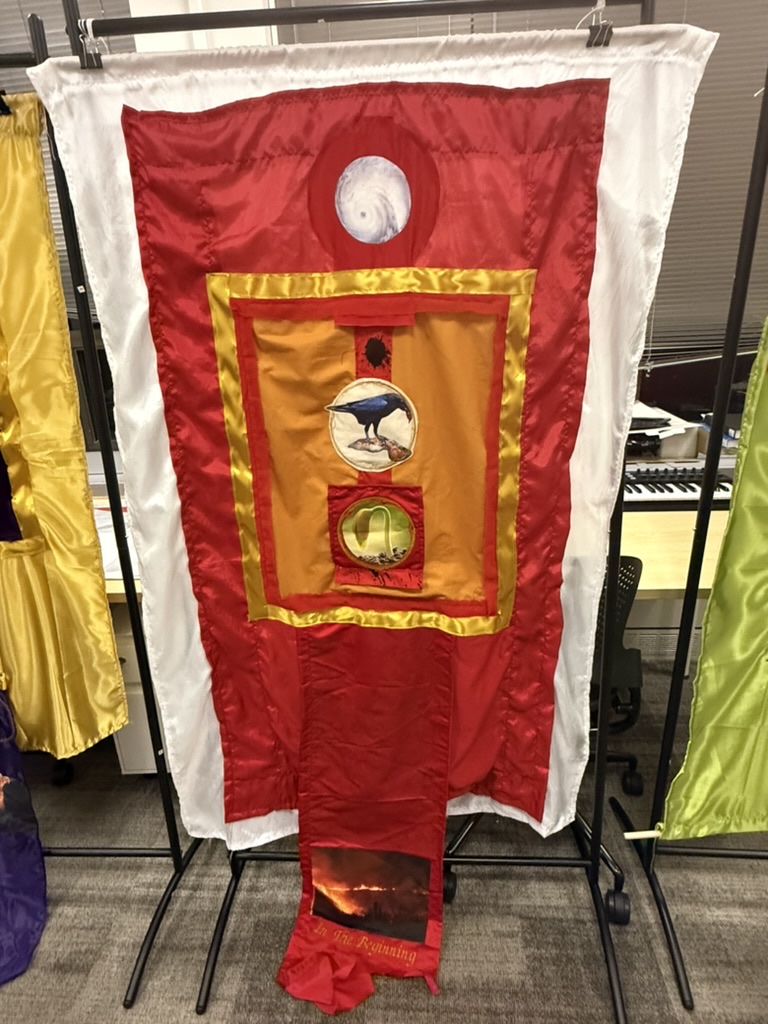
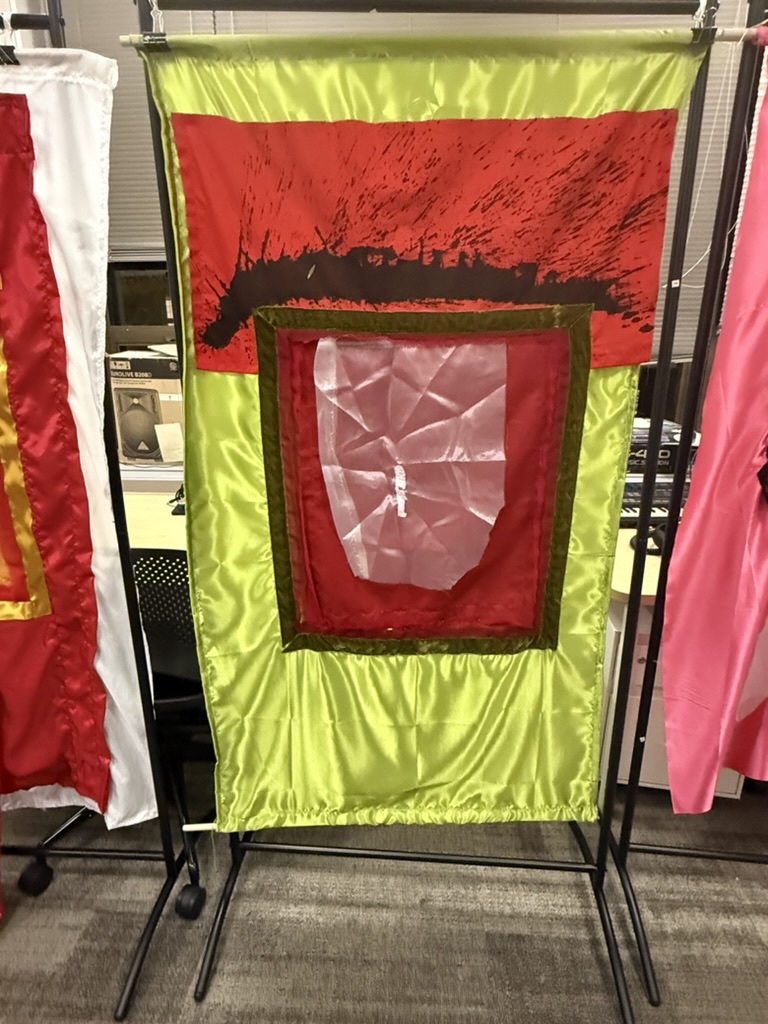
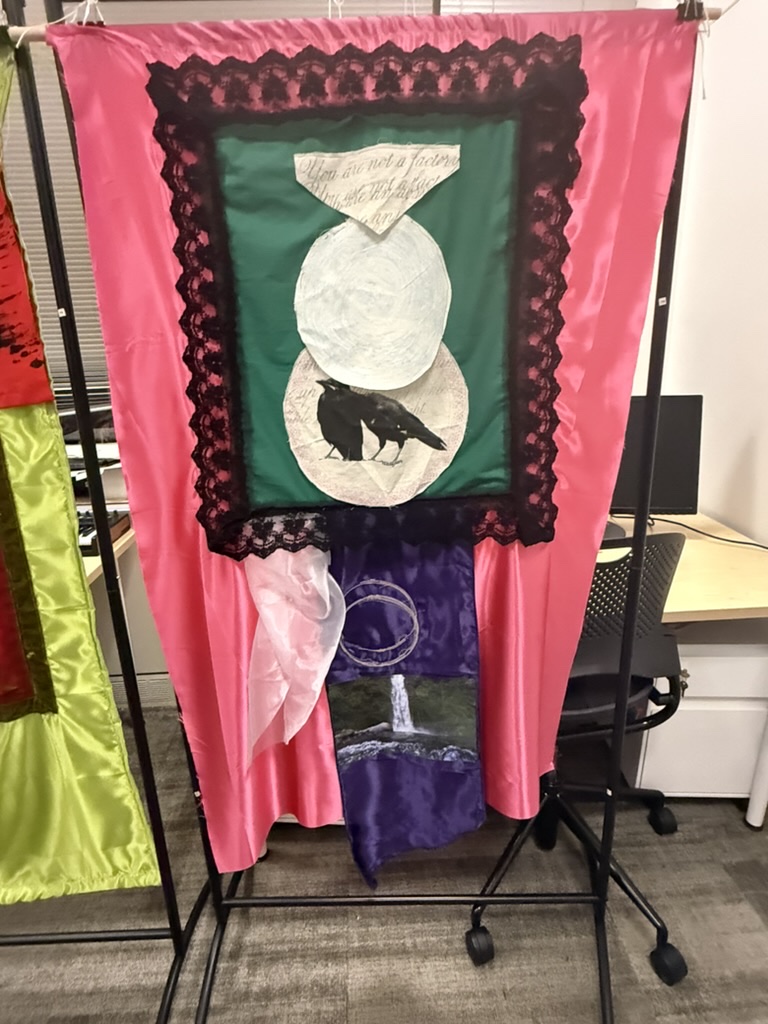
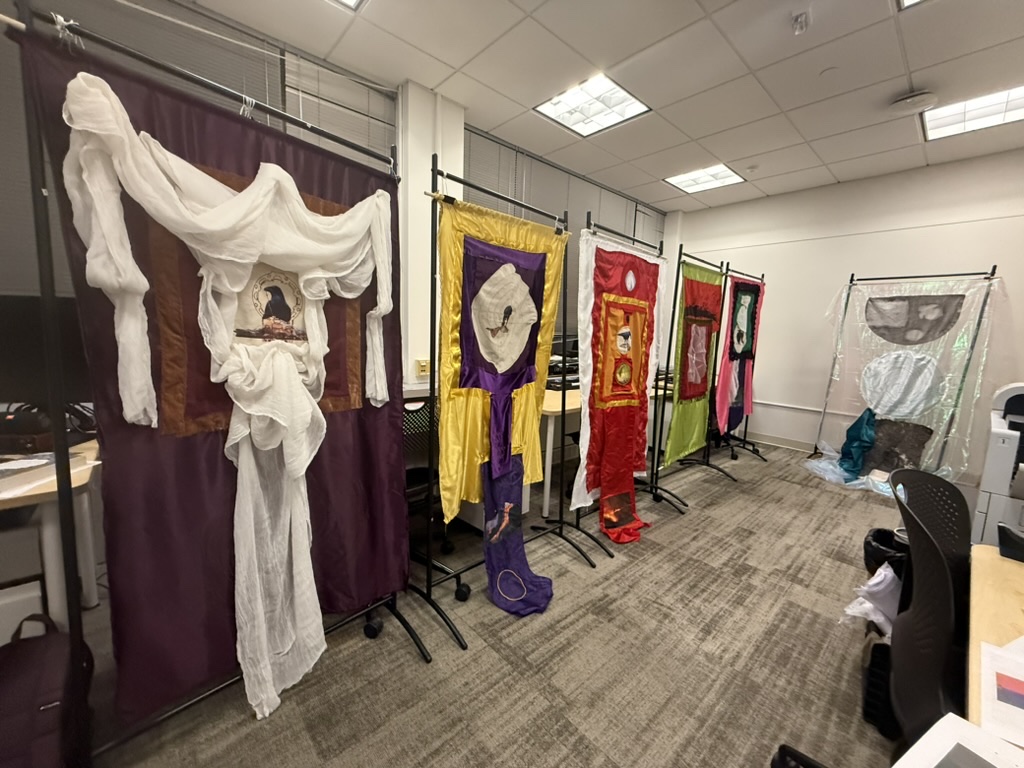
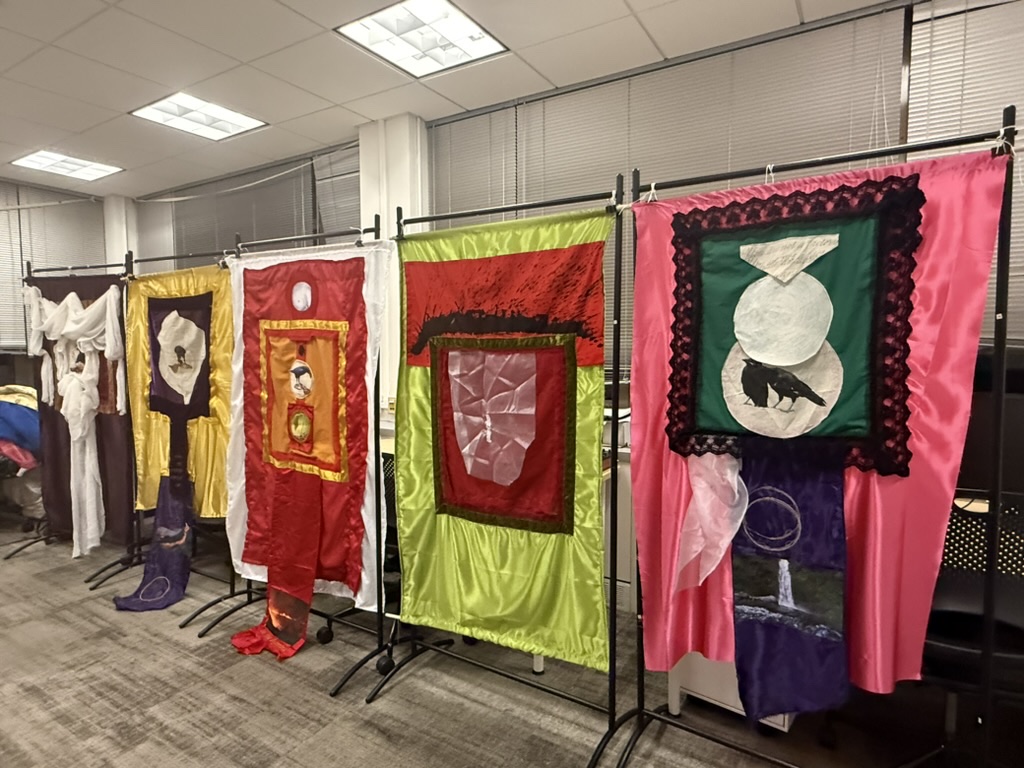
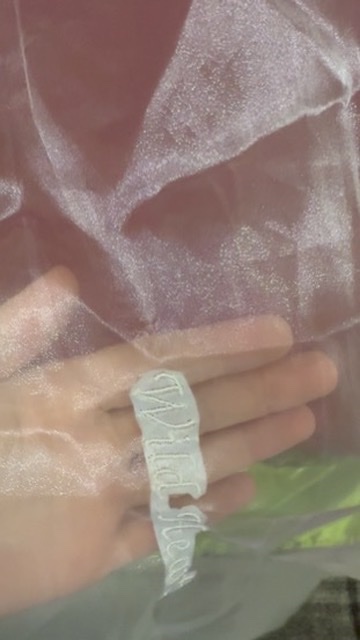
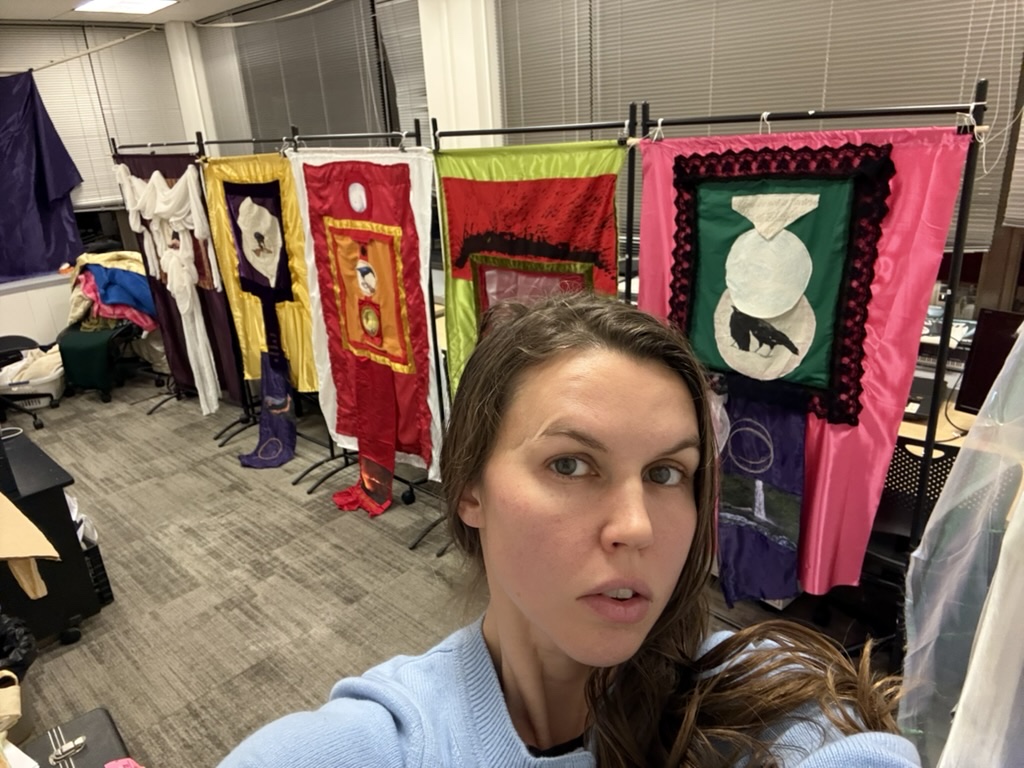
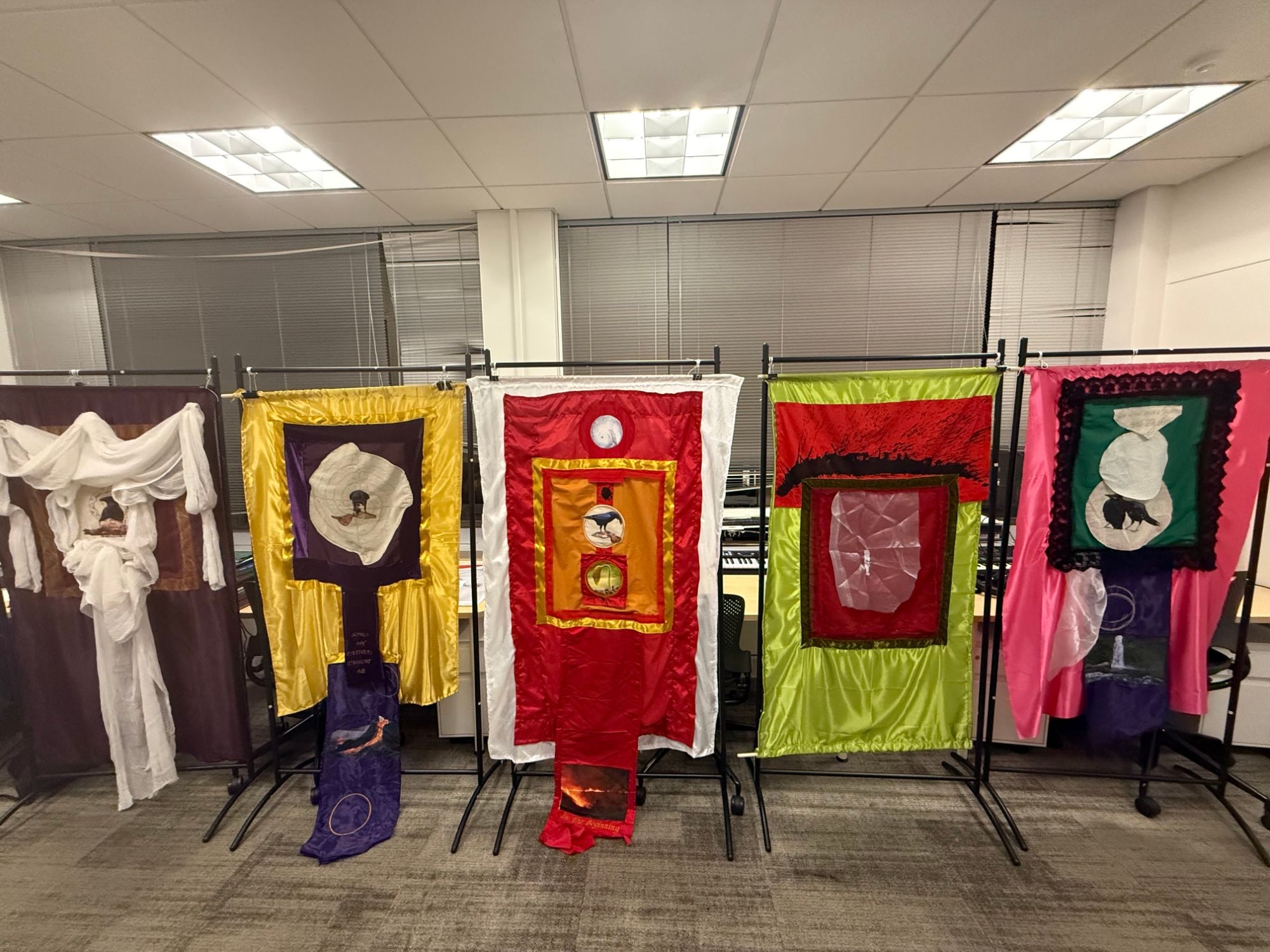
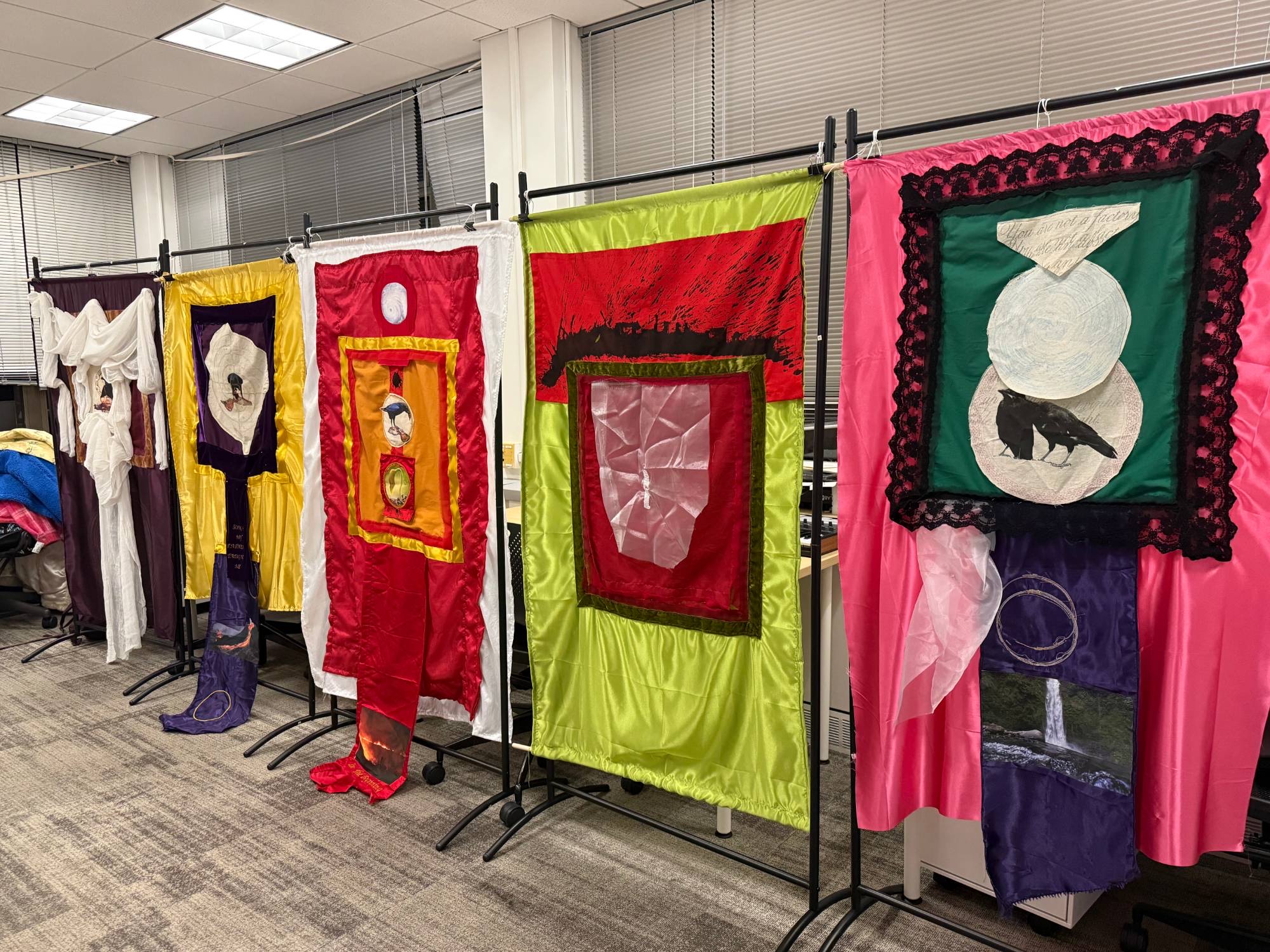
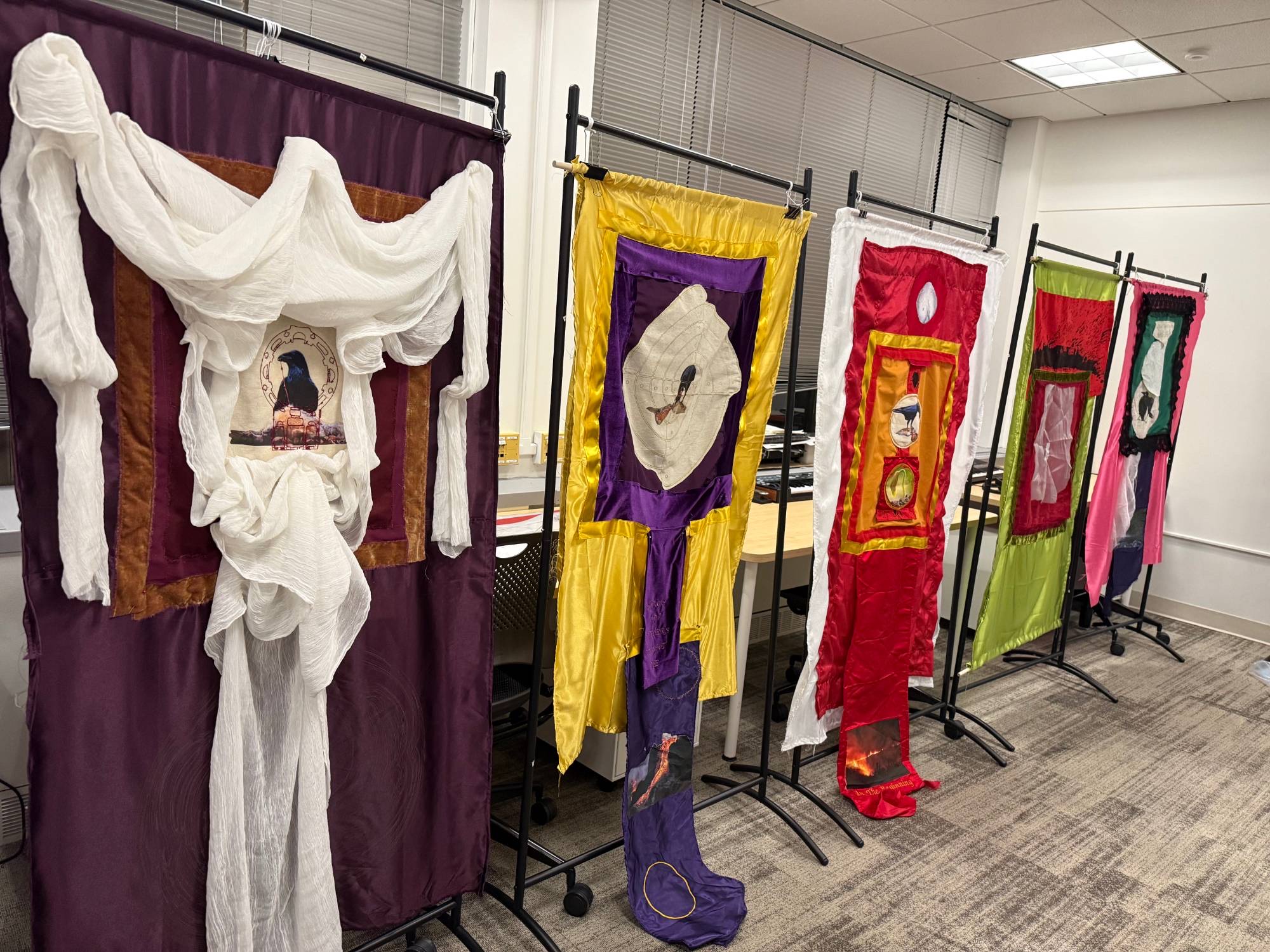
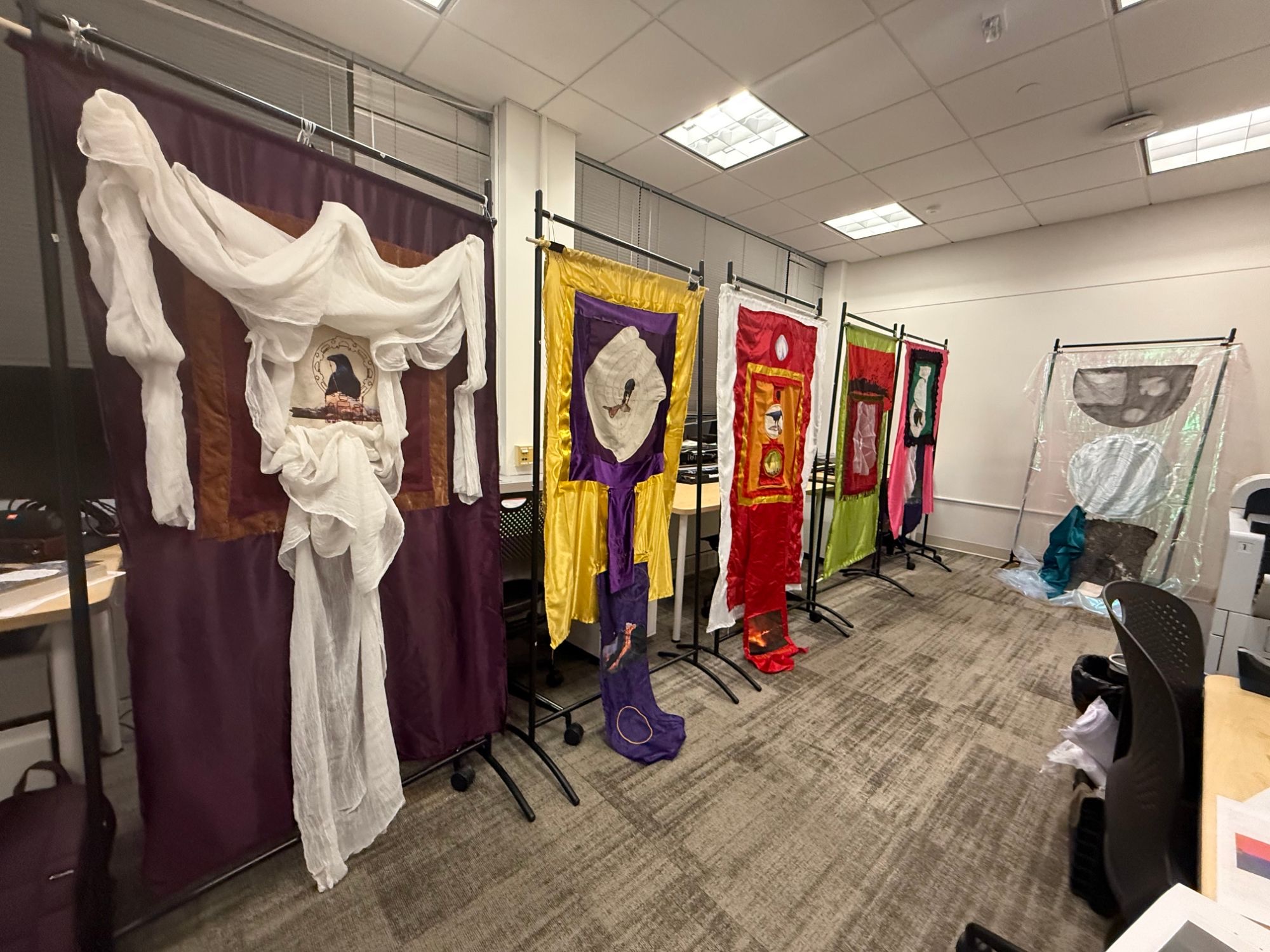
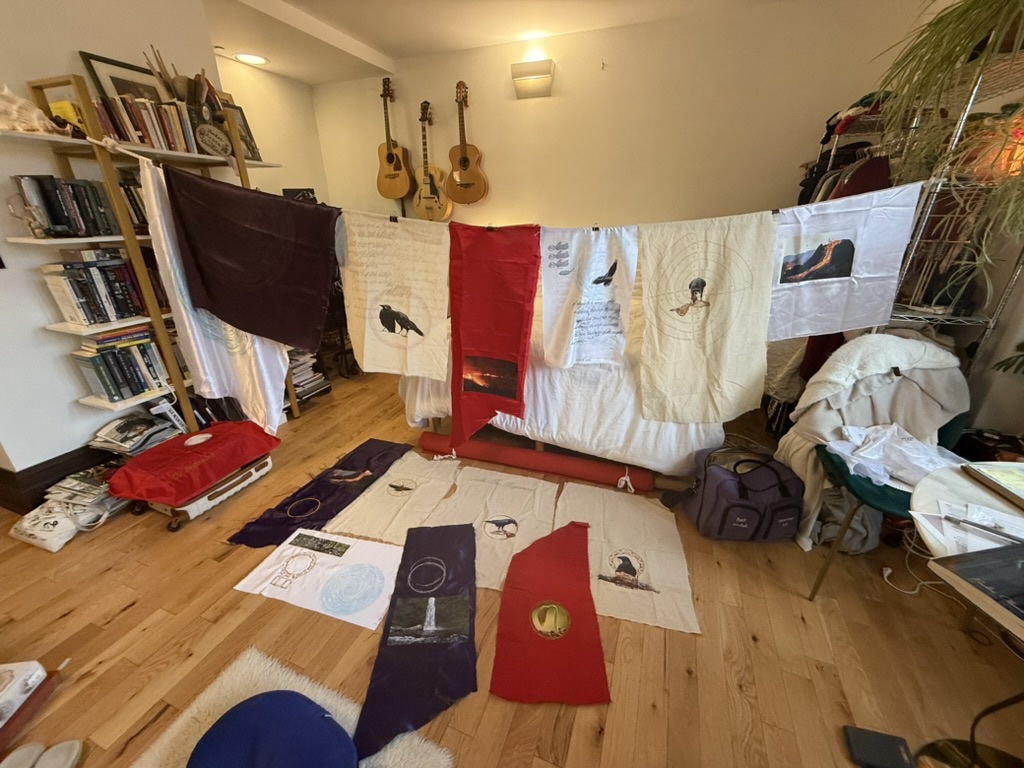
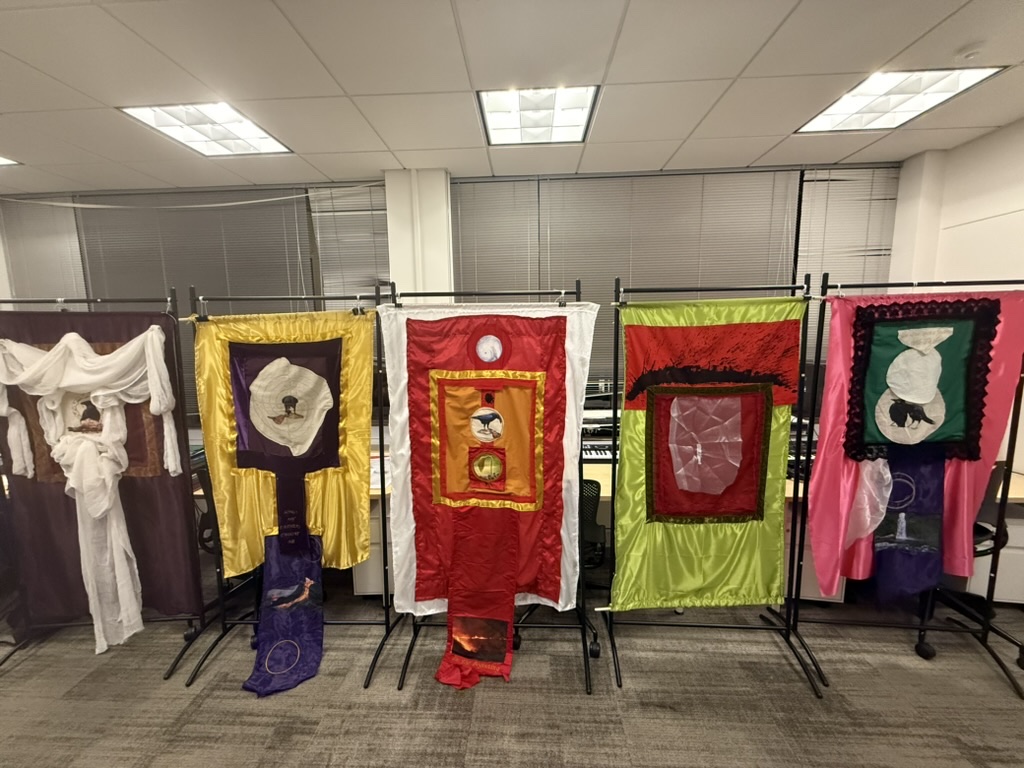
For this premiere with Théo Ould, the score became a set of silk prayer flags. Sewing runs in my family. My grandmother was a seamstress, and so are many of my aunts, so cloth and thread feel like a native language to me. Lately I have been thinking about how literal that is. In 1804 Joseph-Marie Jacquard built a loom that wove its patterns from chains of punched cards. Charles Babbage borrowed those cards for his Analytical Engine, and Ada Lovelace wrote that it "weaves algebraical patterns just as the Jacquard loom weaves flowers and leaves." Punched cards went on to run the first data machines and, eventually, the first computers. Weaving was one of our first ways of writing instructions for a machine, and a score is also a set of instructions.
I have also been studying color as a language. Every culture reads color: the five colors of Tibetan prayer flags stand for the elements, the church year changes its vestments with the seasons, and the great yantras that hang in the homes of yogis are diagrams you read with your eyes and your body. In my travels through different sacred ceremonies and spaces, those hanging objects kept captivating me. They already felt like scores. I wanted to make a score that could live as an art object, holding the history of silk, color, image and symbol, and I wanted the performers to read it the way you read a prayer flag.
The recurring figure on the flags is Raven. In many traditions Raven is a trickster, and tricksters are agents of change: Raven causes a lot of trouble, then has to clean it up, and in the cleaning up, creativity and new worlds are born. I come from a complex spiritual and religious background, and the idea of a ceremonial score, part prayer and part mischief, felt like a beautiful opening.
So the score is a set of flags. We read them, and then we performed what they asked of us.
Reading Color: notes on color as a language →
The prayer-flag scores
 1 / 15